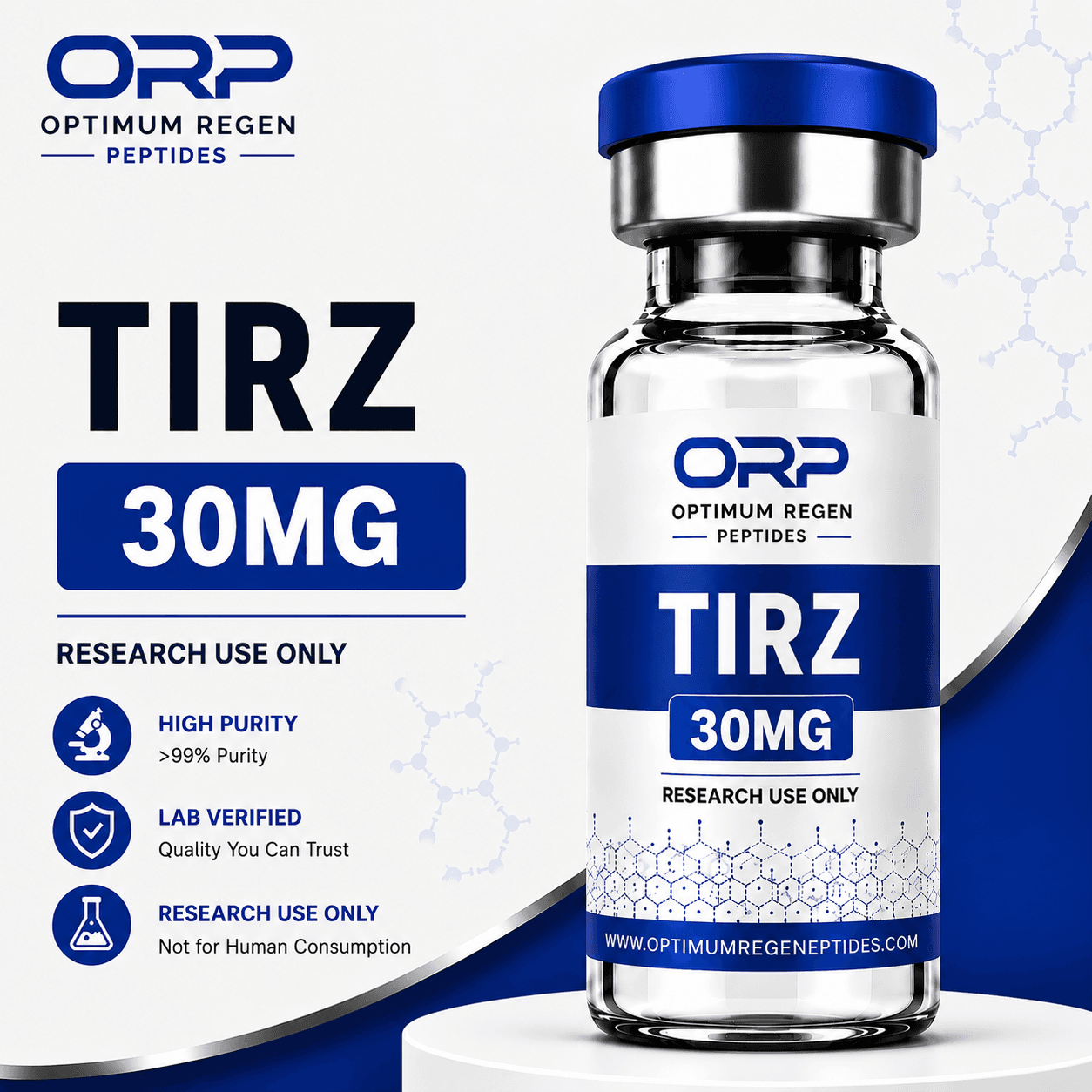
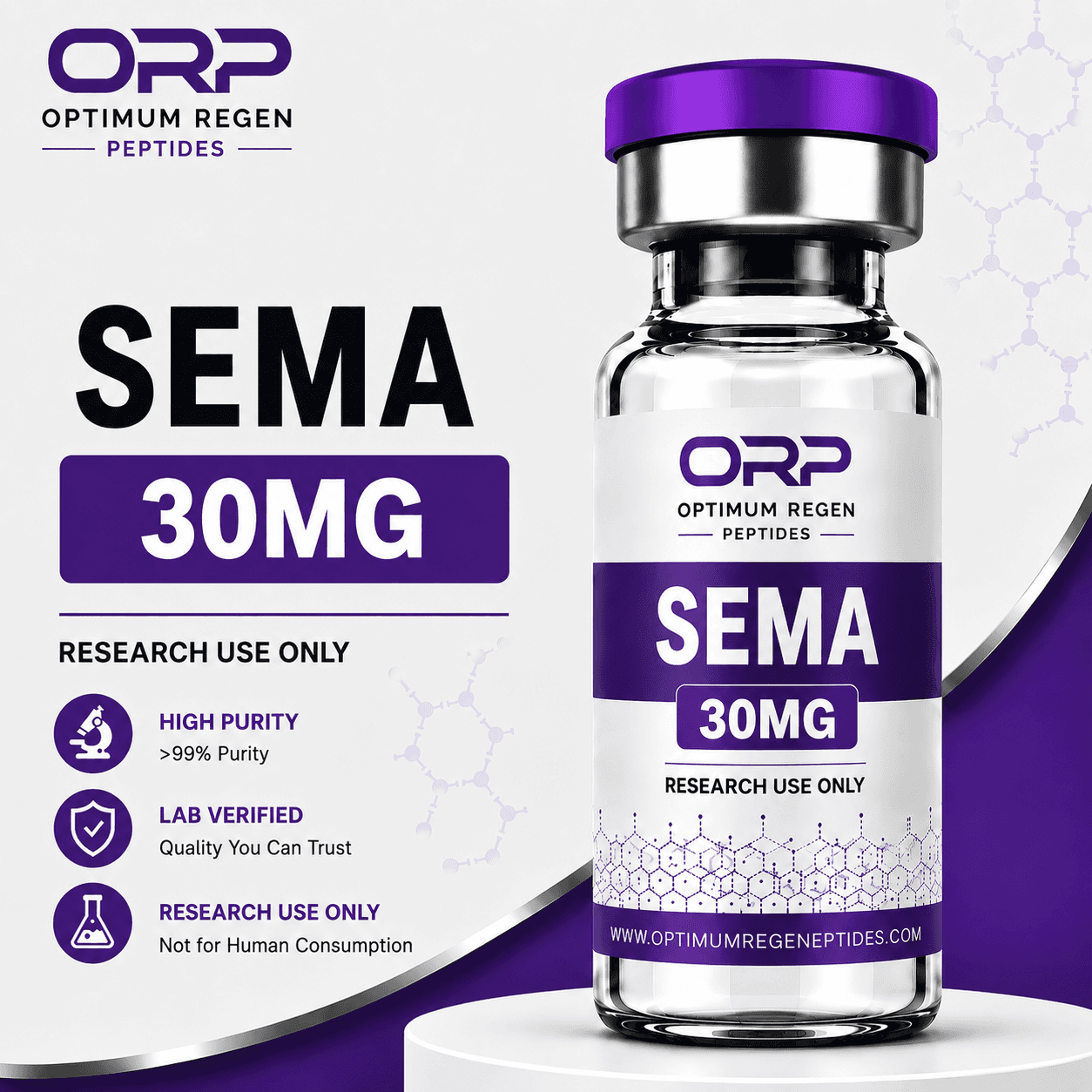
Sema
Compounded in a licensed US 503A pharmacy 🇺🇸
GLP Research Peptide.
Sema is a GLP-1 receptor agonist analogue of human glucagon-like peptide-1, engineered with a C18 fatty diacid side chain for albumin binding and extended half-life, studied in metabolic and receptor pharmacology research. Preclinical researchers investigate its receptor binding kinetics at GLP-1R, downstream cAMP and insulin secretion pathways in pancreatic beta-cell models, and its effects on gastric emptying and appetite-regulatory circuits in laboratory settings. It is also examined in hepatic lipid metabolism studies and cardiovascular research models in preclinical contexts. Supplied as a precision-lyophilized peptide of analytical purity for controlled laboratory investigation only. Not for human or veterinary use.
- 30mg lyophilized format
- Research-grade formulation
- Precision measured
- Laboratory research only
Independently tested by Freedom Diagnostics using HPLC and mass spectrometry. We have not published a certificate for this product yet, so no purity figure is shown here. Every vial carries an accession number you can look up directly with the lab.
- 2-day shipping nationwide, flat $13
- Plain, discreet packaging. No product names on the outside.
- Tracking emailed the moment your order ships.
About Sema
Semaglutide is a 31-amino acid GLP-1 receptor agonist peptide engineered from the native human glucagon-like peptide-1 (7-36) sequence. Two structural changes distinguish it from endogenous GLP-1: an alanine-to-2-aminoisobutyric acid (Aib) substitution at position 8 that blocks DPP-4 enzymatic cleavage, and a C18 fatty diacid side chain conjugated at lysine-26 through a gamma-glutamate and two-unit polyethylene glycol spacer. In research contexts this combination is what separates sema from earlier-generation GLP-1 analogues such as liraglutide, which carries a shorter C16 palmitic acid chain and a markedly shorter plasma half-life profile in comparative pharmacokinetic study designs. ORP supplies the compound as a lyophilized powder at 99% or greater HPLC purity for laboratory characterization work only.
As a GLP-1 research peptide, sema's pharmacology centers on activation of the class B G-protein-coupled GLP-1 receptor, which couples primarily to Gs and drives adenylate cyclase-mediated cAMP accumulation and downstream PKA and Epac2 signaling. In pancreatic beta-cell research models this cascade has been linked to glucose-dependent insulinotropic signaling, while in alpha-cell systems the same receptor pathway is associated with suppressed glucagon output. GLP-1 receptor expression extends past the endocrine pancreas into hypothalamic and brainstem nuclei, cardiac myocytes, renal tubular cells, and hepatocytes, which is why sema appears across a wide span of receptor-distribution and signal-transduction literature rather than a single organ system.
Sema peptide research spans in vitro and in vivo experimental systems. Common in vitro platforms include GLP-1R-transfected HEK293 cell lines and INS-1 or MIN6 beta-cell lines used for cAMP accumulation assays, receptor binding and internalization studies, and glucose-stimulated insulin secretion protocols. In vivo, diet-induced obese mice and Zucker diabetic fatty rats are frequently referenced rodent models for examining gastric emptying kinetics, hypothalamic feeding-circuit activity, and beta-cell mass endpoints under controlled laboratory conditions.
Every ORP sema batch is characterized by reverse-phase HPLC for purity and by mass spectrometry to confirm the expected molecular formula, C187H291N45O59, and molar mass of approximately 4113.6 g/mol, against the registered CAS number 910463-68-2. Third-party laboratories independently verify purity and screen for residual solvents and endotoxin before a certificate of analysis is issued alongside the batch. The peptide is compounded by a licensed US 503A pharmacy, which applies pharmaceutical-grade handling and documentation practices to a product that remains strictly for laboratory research and is not intended for human or veterinary administration.
Semaglutide reconstitution in the laboratory follows standard lyophilized-peptide handling practice: the sealed vial is brought to room temperature, a calculated volume of bacteriostatic water or another appropriate diluent is added slowly down the interior wall of the vial, and the contents are swirled gently rather than shaken to avoid mechanical denaturation and foaming of the peptide. Once reconstituted, the solution should be inspected for clarity, protected from light, and stored refrigerated at 2-8C for short-term bench use, since repeated freeze-thaw cycles and room-temperature storage degrade peptide integrity over time. Unreconstituted lyophilized powder is more stable and is typically kept frozen at -20C until the point of use in a research protocol. These handling notes describe laboratory solution preparation only and are not administration or dosing instructions for humans or animals.
Researchers who buy semaglutide research peptide from ORP receive a batch-specific certificate of analysis, third-party purity verification, and cold-chain packaging designed to preserve peptide integrity in transit. Because sema is compounded through a licensed US 503A pharmacy rather than sourced from unregulated bulk suppliers, institutions can trace a given vial back to documented compounding and testing records, which matters for laboratories that need reproducible material across experimental runs.
All sema peptide products distributed by Optimum ReGen Peptides are intended strictly for in vitro and preclinical laboratory research by qualified personnel. Nothing in this description constitutes medical advice or a claim of human benefit, and the product has not been evaluated for diagnosing, treating, curing, or preventing any disease. This peptide is not for human consumption and should be handled with standard laboratory personal protective equipment under an institution's chemical hygiene plan.
Buy Sema online
Sema (Semaglutide) is in stock and available to buy online from Optimum ReGen Peptides — a real American research-peptide company with a physical storefront in Medford, Oregon, not an anonymous overseas dropshipper. Priced from $125, every order ships within two business days, flat $13 nationwide, in plain discreet packaging with tracking.
As your Sema supplier we back every batch with a third-party certificate of analysis and compound in a licensed US 503A pharmacy. Vials are supplied lyophilized at analytical purity for laboratory and research use only, not for human consumption.
Researched For
Sema serves as a high-affinity, long-acting research tool for studying GLP-1 receptor activation kinetics, downstream signaling (cAMP, PKA, EPAC2), and receptor internalization/trafficking in pancreatic cell lines and heterologous expression systems.
Studies have investigated sema's effects on beta-cell insulin secretion dynamics, beta-cell mass preservation in diabetic models, and the transcriptional consequences of prolonged GLP-1R activation in isolated islets and INS-1 cell cultures.
GLP-1R is expressed in cardiomyocytes and coronary endothelium, and sema has been studied in cardiac ischemia-reperfusion models and inflammation paradigms to characterize cardioprotective signaling pathways at the molecular level.
Research has examined GLP-1R expression in hypothalamic nuclei and brainstem areas involved in energy balance. Studies use sema alongside GLP-1R-specific tracers and knockout models to map receptor-mediated anorectic signaling in the CNS.
Preclinical studies in diet-induced obesity models have investigated sema's effects on hepatic lipid accumulation, steatosis markers, and inflammatory cytokine expression in liver tissue, examining GLP-1R signaling as a modulator of hepatic lipid homeostasis.
How It Is Studied
Pharmacological characterization of sema at the GLP-1 receptor uses cAMP accumulation assays in GLP-1R-expressing HEK293 cells, radioligand competition binding with [125I]-GLP-1 or [3H]-exendin-4, and beta-arrestin recruitment BRET assays to determine binding affinity, efficacy, and biased agonism profiles. These in vitro studies establish the compound's receptor pharmacology independent of pharmacokinetic variables.
Beta-cell secretion studies use isolated pancreatic islets from rodent or human donors, exposing them to sema at defined concentrations during glucose-stimulated insulin secretion (GSIS) assays. Researchers measure insulin, C-peptide, and glucagon release by ELISA, and assess islet gene expression using RNA sequencing or targeted qPCR panels to characterize transcriptional responses to prolonged GLP-1R activation.
In vivo metabolic research employs diet-induced obesity mouse models (DIO C57BL/6) or genetic diabetic models (db/db, ob/ob) with controlled sema dosing and comprehensive metabolic phenotyping including indirect calorimetry, glucose and insulin tolerance tests, body composition by NMR or DXA, and tissue-level molecular profiling of liver, fat, and muscle samples.
Specifications
| Form | Lyophilized powder |
|---|---|
| Purity | >= 99% (HPLC) |
| Molecular Formula | C187H291N45O59 |
| Molar Mass | 4113.6 g/mol |
| CAS Number | 910463-68-2 |
Storage & Handling
Lyophilized sema research material should be stored at -20°C, protected from light and humidity. The fatty acid modification that enables albumin binding is stable under these conditions. Vials should be sealed with Parafilm or similar barrier material and equilibrated to room temperature under desiccant before opening.
Reconstituted sema solutions for in vitro use should be prepared in phosphate-buffered saline (pH 7.4) or similar physiological buffers and held at 4°C for up to one week given the compound's inherent stability. For in vivo studies, researchers prepare dosing solutions fresh and maintain cold-chain until administration. Glass vials are preferred over polypropylene to minimize peptide adsorption.
Frequently Asked Questions
What is semaglutide peptide?+
What is sema peptide research used for?+
What is a GLP-1 research peptide?+
What does semaglutide reconstitution involve in laboratory research?+
Where can I buy semaglutide research peptide?+
What is the molecular formula and CAS number of semaglutide?+
How does semaglutide differ from liraglutide in research comparisons?+
What purity level does ORP's sema peptide meet?+
How should semaglutide be stored before and after reconstitution?+
Is semaglutide the same molecule as native GLP-1?+
What is the regulatory status of ORP's semaglutide?+
Related research compounds