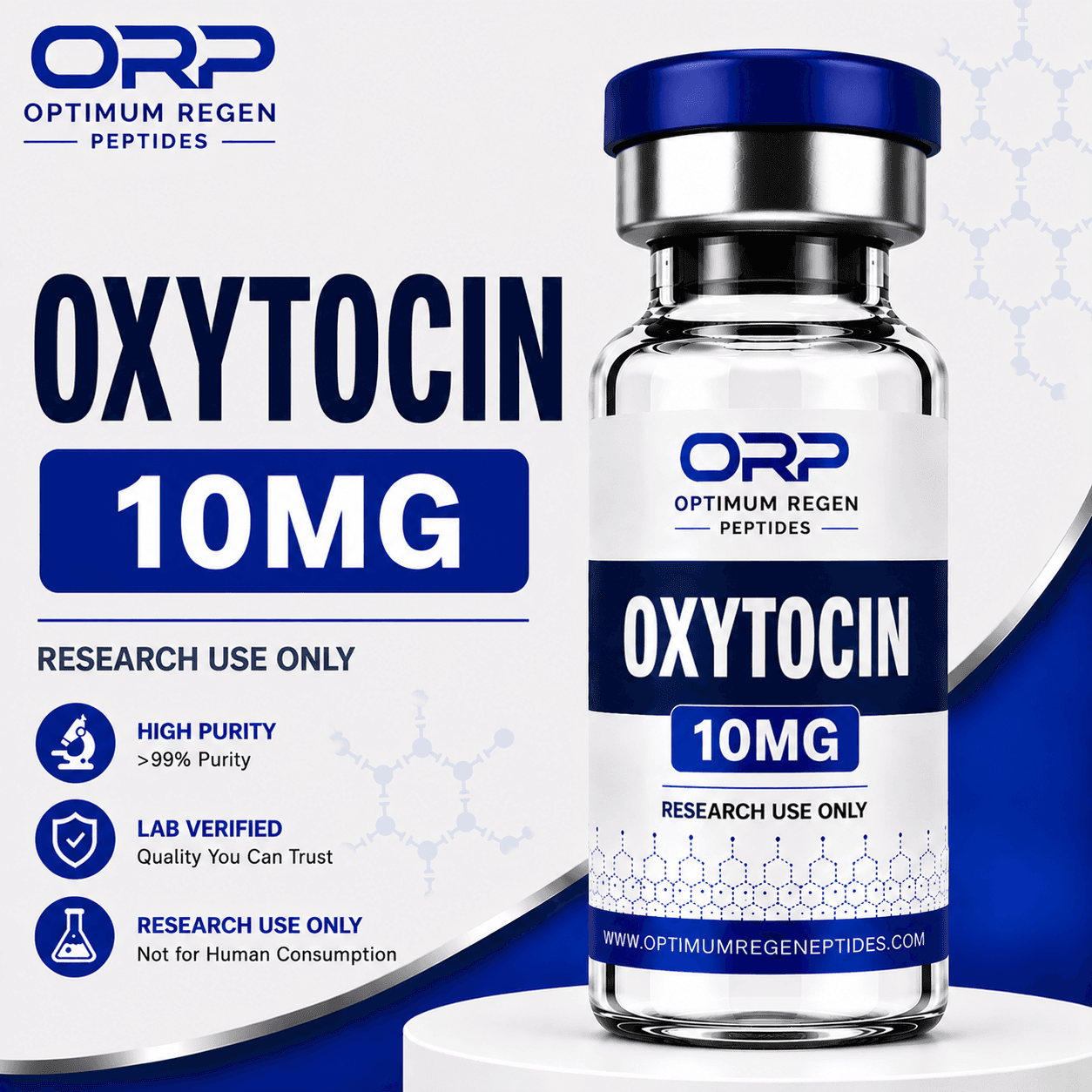
Oxytocin
Compounded in a licensed US 503A pharmacy 🇺🇸
Peptide Research Compound.
Oxytocin is a nonapeptide neurohormone synthesized in the hypothalamus and studied extensively in receptor signaling, social behavior neuroscience, and smooth muscle physiology research models. Laboratory researchers investigate its interactions with oxytocin receptors in neural tissue cultures, cardiomyocyte preparations, and uterine smooth muscle cell models to map downstream signaling cascades. It is also employed in studies examining oxytocin receptor pharmacology, second-messenger systems, and peptide stability under various experimental conditions. Supplied as a stable lyophilized peptide of analytical purity for laboratory use only. Reconstitute under sterile conditions and store according to standard peptide handling protocols.
- 10mg research vial
- Research-grade purity
- Stable formulation
- Laboratory research only
Independently tested by Freedom Diagnostics using HPLC and mass spectrometry. We have not published a certificate for this product yet, so no purity figure is shown here. Every vial carries an accession number you can look up directly with the lab.
- 2-day shipping nationwide, flat $13
- Plain, discreet packaging. No product names on the outside.
- Tracking emailed the moment your order ships.
About Oxytocin
Oxytocin is a nonapeptide neurohormone synthesized in the paraventricular and supraoptic nuclei of the hypothalamus and released from the posterior pituitary. Its amino acid sequence (Cys-Tyr-Ile-Gln-Asn-Cys-Pro-Leu-Gly-NH2, with a disulfide bridge between positions 1 and 6) has been conserved across mammals, and it was the first peptide hormone to be sequenced and synthesized, a milestone accomplished by Vincent du Vigneaud in 1953.
In laboratory research, oxytocin is studied across a remarkably broad range of physiological systems. Originally characterized for its roles in uterine contraction and lactation, subsequent decades of research have revealed extensive oxytocin receptor (OXTR) expression in the brain, heart, immune cells, and peripheral organs. This widespread distribution has driven investigation into oxytocin's roles in social behavior neuroscience, stress axis regulation, pain modulation, cardiovascular physiology, and immune function.
The synthetic form of oxytocin is chemically identical to the endogenous nonapeptide and is widely used as a research tool compound and pharmacological reference standard. Its well-characterized receptor pharmacology, available OXTR knockout mouse lines, and established behavioral assay paradigms make it one of the most widely studied neuropeptides in biomedical research.
Buy Oxytocin online
Oxytocin is in stock and available to buy online from Optimum ReGen Peptides — a real American research-peptide company with a physical storefront in Medford, Oregon, not an anonymous overseas dropshipper. Priced from $50, every order ships within two business days, flat $13 nationwide, in plain discreet packaging with tracking.
As your Oxytocin supplier we back every batch with a third-party certificate of analysis and compound in a licensed US 503A pharmacy. Vials are supplied lyophilized at analytical purity for laboratory and research use only, not for human consumption.
Researched For
Oxytocin is extensively studied in the neuroscience of social recognition, affiliative behavior, and attachment in rodent models. Researchers use OXTR knockout animals, intranasal administration paradigms, and optogenetic tools targeting oxytocinergic circuits to dissect the peptide's contribution to prosocial behavior.
Laboratory studies have examined oxytocin's modulatory effects on HPA axis reactivity, investigating how the peptide influences cortisol/corticosterone release in stress paradigms and its interactions with CRH-secreting circuits in the hypothalamus and limbic system.
Research has documented oxytocin receptor expression in cardiomyocytes and vascular endothelium, with studies examining how oxytocin influences atrial natriuretic peptide release, vascular tone, and cardiac electrophysiology in isolated heart preparations and whole-animal models.
Investigators have studied oxytocin in spinal cord pain processing models, examining how oxytocinergic projections from the hypothalamus to the dorsal horn modulate nociceptive transmission and influence pain threshold measurements in controlled laboratory paradigms.
Oxytocin receptor expression has been characterized on T lymphocytes, macrophages, and dendritic cells. Laboratory studies have investigated how oxytocin influences cytokine production, immune cell trafficking, and inflammatory pathway activation in these cell populations.
How It Is Studied
Behavioral neuroscience studies employ standardized paradigms such as the three-chamber social approach test, resident-intruder assay, and partner preference tests in rodents to quantify social behavior outcomes. Researchers pair these behavioral measures with in vivo microdialysis to sample oxytocin release in specific brain regions (nucleus accumbens, amygdala) during social interactions, correlating peptide dynamics with behavioral outputs.
Electrophysiological approaches use whole-cell patch-clamp recordings in brain slice preparations from oxytocinergic nuclei or OXTR-expressing target regions. Researchers characterize how exogenous oxytocin application modifies neuronal excitability, inhibitory/excitatory balance, and synaptic transmission in circuits relevant to stress and social behavior.
Cardiovascular studies employ isolated perfused heart preparations (Langendorff model) and anesthetized rodent preparations with direct hemodynamic monitoring to examine oxytocin's acute cardiovascular effects. Molecular analysis of OXTR expression, downstream signaling (PLC-IP3-calcium, PKC, eNOS activation), and ANP release are combined with physiological endpoints to characterize the cardiac oxytocin system at the mechanistic level.
Specifications
| Form | Lyophilized powder |
|---|---|
| Purity | >= 99% (HPLC) |
| Molecular Formula | C43H66N12O12S2 |
| Molar Mass | 1007.2 g/mol |
| CAS Number | 50-56-6 |
| Sequence | Cys-Tyr-Ile-Gln-Asn-Cys-Pro-Leu-Gly-NH2 (disulfide bridge Cys1-Cys6) |
Storage & Handling
Lyophilized oxytocin should be stored at -20°C in a sealed container, protected from light and moisture. The disulfide bond is stable under dry, cold conditions, and the lyophilized peptide maintains integrity for extended periods under proper storage.
Reconstituted oxytocin solutions should be stored at 4°C and used within 24 to 48 hours. Since oxytocin contains a disulfide bridge, researchers should avoid reducing conditions (e.g., DTT or beta-mercaptoethanol) in reconstitution buffers, as these will cleave the bridge and inactivate the peptide. Neutral pH aqueous buffers are standard for research use.
Frequently Asked Questions
What is the historical significance of oxytocin in peptide chemistry?+
How do researchers distinguish oxytocin from vasopressin in experimental systems?+
What brain regions express oxytocin receptors in research models?+
Is intranasal oxytocin used in human research studies?+
What role does oxytocin receptor signaling play in cardiac research?+
Related research compounds