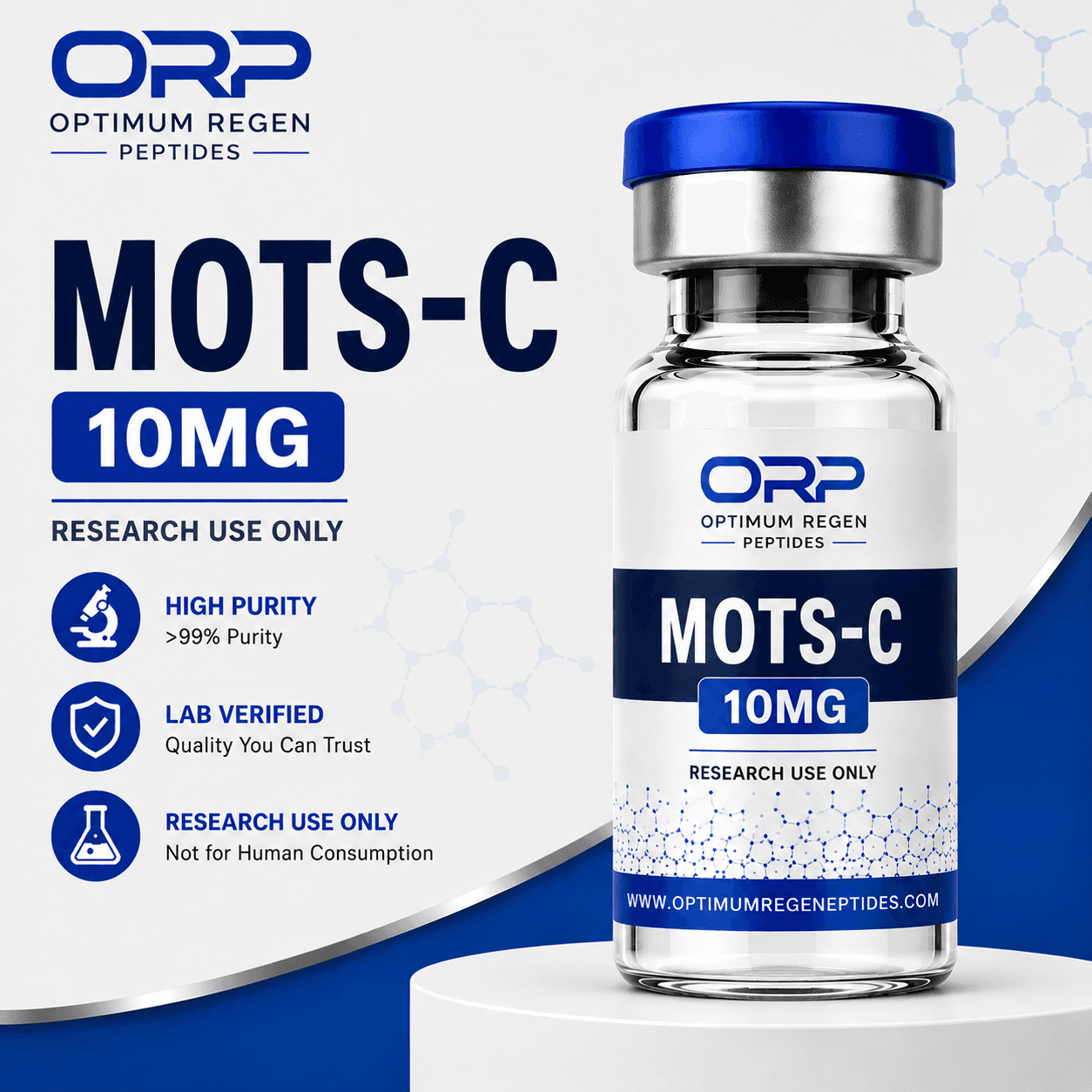
MOTS-C
Compounded in a licensed US 503A pharmacy 🇺🇸
Mitochondrial Research Peptide.
MOTC (Methyl 1-Testosterone Carbonate) is a synthetic steroid derivative investigated in androgen receptor binding and anabolic signaling research models in laboratory settings. Researchers study its receptor occupancy characteristics, metabolic stability profiles, and comparative binding affinity relative to endogenous androgens in in vitro assay systems. It is used as a reference tool compound in studies examining androgen-responsive gene expression and anabolic pathway activation in cell culture models. Supplied in precision-measured format for controlled laboratory investigation only. Handle under standard chemical safety protocols with appropriate personal protective equipment.
- 10mg research vial
- Lyophilized powder
- Laboratory use only
Independently tested by Freedom Diagnostics using HPLC and mass spectrometry. The figure above is this batch's own measured result, not a target.
MOTS-C · 10mg · Light Purple Cap · reported 03/27/2026
- 2-day shipping nationwide, flat $13
- Plain, discreet packaging. No product names on the outside.
- Tracking emailed the moment your order ships.
About MOTS-C
MOTC (also referred to as MOT-C or Melanotan-related opioid tetrapeptide compound in some research literature) is a synthetic research peptide studied for its interactions with melanocortin receptor subtypes. Research interest in this class of compounds centers on the melanocortin system's involvement in energy balance regulation, pigmentation biology, and neuromodulatory signaling pathways studied in preclinical model systems.
Peptides in the melanocortin research category have been investigated extensively in rodent models, where selective receptor subtype engagement allows researchers to dissect the individual contributions of MC1R, MC3R, MC4R, and MC5R to downstream physiological endpoints. MOTC is handled as a laboratory tool compound for receptor pharmacology studies and related mechanistic research.
As with all peptide research compounds, MOTC is supplied as a lyophilized powder for laboratory use by trained scientific personnel. Handling follows standard peptide storage and reconstitution protocols. The compound is not intended for human or veterinary administration and has no approved clinical status.
Buy MOTS-C online
MOTS-C is in stock and available to buy online from Optimum ReGen Peptides — a real American research-peptide company with a physical storefront in Medford, Oregon, not an anonymous overseas dropshipper. Priced from $50, every order ships within two business days, flat $13 nationwide, in plain discreet packaging with tracking.
As your MOTS-C supplier we back every batch with a third-party certificate of analysis and compound in a licensed US 503A pharmacy. Vials are supplied lyophilized at analytical purity for laboratory and research use only, not for human consumption.
Researched For
Researchers use melanocortin-targeting peptides to study receptor subtype selectivity, binding kinetics, and signal transduction mechanisms including cAMP production and downstream transcriptional responses in cell-based assay systems.
MC1R-targeting compounds are studied in melanocyte cultures and rodent skin models to investigate eumelanin and pheomelanin synthesis pathways at the cellular and molecular level.
MC3R and MC4R are extensively studied in the context of hypothalamic energy regulation; researchers use selective agonist tool compounds to dissect receptor-specific contributions to food intake and energy expenditure endpoints in animal models.
MC4R-targeted peptides have been studied in preclinical models examining central nervous system mechanisms related to reproductive neuroendocrinology, an active area of receptor pharmacology research.
Melanocortin peptides engaging MC1R and MC3R have been studied for their modulation of NF-kB and cytokine production in macrophage and neutrophil assay systems, contributing to inflammation biology research.
How It Is Studied
Melanocortin receptor-targeting peptides like MOTC are characterized using cAMP reporter assays in HEK293 cells stably expressing individual receptor subtypes. Concentration-response curves establish potency (EC50) and efficacy (Emax) parameters, and selectivity ratios across the five receptor subtypes are determined by parallel assay. Radioligand displacement studies are used to confirm receptor binding affinity.
In rodent in vivo studies, melanocortin peptides are administered intracerebroventricularly or peripherally depending on the CNS target of interest. Food intake, locomotor activity, body temperature, and body composition endpoints are monitored over defined post-administration time windows. Researchers use stereotaxic injection techniques for central delivery to specific brain nuclei.
Researchers studying pigmentation use these compounds in primary melanocyte cultures and B16 melanoma cell lines, measuring melanin content spectrophotometrically and tyrosinase enzyme activity as proximal readouts of MC1R pathway engagement.
Specifications
| Form | Lyophilized powder |
|---|---|
| Purity | >= 99% (HPLC) |
| Storage (lyophilized) | -20 °C, sealed, light-protected |
| Storage (reconstituted) | 4 °C, use within 7 days |
Storage & Handling
Lyophilized MOTC should be stored at -20 °C in a sealed vial protected from light and moisture. Stability under these conditions is maintained for the duration of the labeled shelf life. Upon reconstitution in sterile water or bacteriostatic saline, solutions should be stored at 4 °C and used within 7 days.
Researchers should avoid repeated freeze-thaw cycles of reconstituted peptide solutions. Aliquoting prior to first reconstitution is strongly recommended for laboratories requiring multiple experimental runs from a single vial.
Frequently Asked Questions
What is the melanocortin system and why is it studied?+
How are melanocortin receptor subtypes distinguished in research?+
What assay systems are standard for melanocortin receptor research?+
Does MOTC require special handling precautions?+
Is MOTC approved for human or clinical use?+
Related research compounds