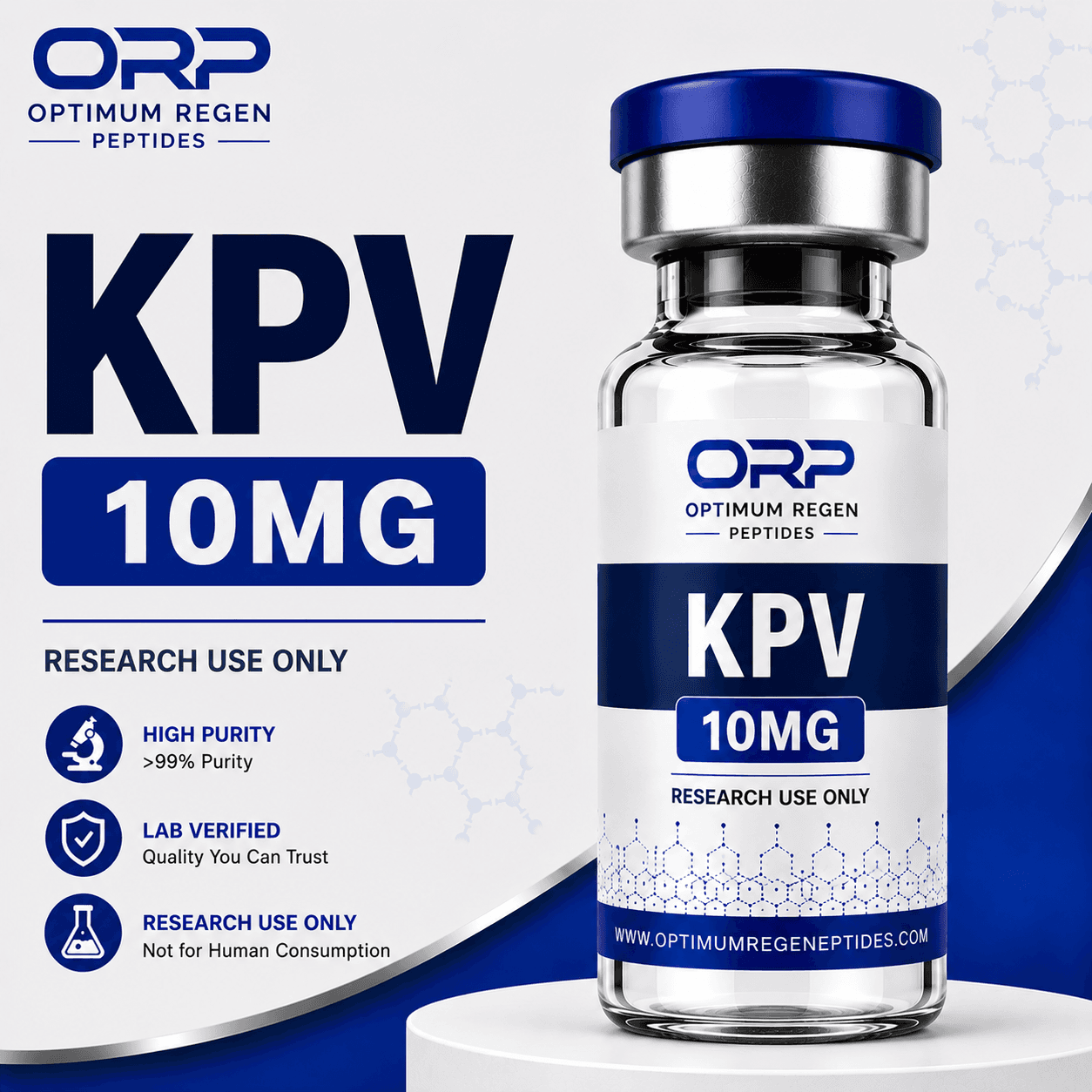
KPV
Compounded in a licensed US 503A pharmacy 🇺🇸
Anti-Inflammatory Research Peptide.
KPV (Lys-Pro-Val) is a C-terminal tripeptide of alpha-melanocyte stimulating hormone (alpha-MSH), studied in inflammatory response modulation and immune signaling research models. Laboratory investigations examine its interactions with melanocortin receptors and its downstream effects on pro-inflammatory cytokine pathways including NF-kB and COX-2 in cell culture systems. Researchers also study it in intestinal epithelial cell models for its effects on mucosal barrier function and inflammatory marker expression. Supplied as a stable lyophilized tripeptide of analytical purity for in vitro and preclinical research use only. Handle under sterile laboratory conditions.
- Tripeptide research compound
- Lyophilized for stability
- Secure laboratory packaging
- Laboratory research only
Independently tested by Freedom Diagnostics using HPLC and mass spectrometry. The figure above is this batch's own measured result, not a target.
KPV · 10mg · White Cap · reported 07/20/2026
- 2-day shipping nationwide, flat $13
- Plain, discreet packaging. No product names on the outside.
- Tracking emailed the moment your order ships.
About KPV
KPV is a tripeptide derived from the C-terminal sequence of alpha-melanocyte-stimulating hormone (alpha-MSH), composed of the amino acids lysine, proline, and valine. As a fragment of alpha-MSH, KPV has been studied in laboratory settings for its potential to engage melanocortin receptor pathways, which are involved in the regulation of inflammatory signaling cascades.
Research has investigated KPV in the context of intestinal inflammation, wound biology, and innate immune modulation. Studies in cell culture and preclinical animal models have examined how this small peptide interacts with melanocortin receptors expressed on immune and epithelial cells, influencing cytokine production and tissue homeostasis signals.
As a short, structurally defined tripeptide, KPV is of interest in peptide science for its relative resistance to proteolytic degradation compared to longer peptide sequences, as well as for its potential utility as a research scaffold in melanocortin receptor pharmacology studies.
Buy KPV online
KPV (Lysine-Proline-Valine) is in stock and available to buy online from Optimum ReGen Peptides — a real American research-peptide company with a physical storefront in Medford, Oregon, not an anonymous overseas dropshipper. Priced from $60, every order ships within two business days, flat $13 nationwide, in plain discreet packaging with tracking.
As your KPV supplier we back every batch with a third-party certificate of analysis and compound in a licensed US 503A pharmacy. Vials are supplied lyophilized at analytical purity for laboratory and research use only, not for human consumption.
Researched For
KPV has been investigated in preclinical models of intestinal and cutaneous inflammation, with studies examining its influence on pro-inflammatory cytokine expression such as TNF-alpha and IL-6 in cell culture systems.
As an alpha-MSH C-terminal fragment, KPV is studied for its interactions with melanocortin receptors (particularly MC1R and MC3R), providing insight into the minimal pharmacophore required for receptor engagement.
Laboratory studies have used KPV to examine its effects on intestinal epithelial cell function and barrier integrity in preclinical colitis models, investigating melanocortin signaling in the gut.
Research has explored how KPV influences cellular responses relevant to tissue repair, including inflammatory resolution and keratinocyte behavior, in controlled in vitro and in vivo preclinical settings.
Investigators have studied how KPV affects macrophage and dendritic cell activation states in laboratory models, characterizing the peptide's interactions with melanocortin signaling in innate immune cells.
How It Is Studied
In laboratory research, KPV is commonly applied to cell lines expressing melanocortin receptors (including MC1R and MC3R) to assess binding affinity via radioligand competition assays and to measure downstream signaling responses such as cAMP accumulation and NF-kB pathway inhibition.
Preclinical inflammation models (including chemically induced colitis models in rodents) have been used to investigate the effects of KPV administration on histological markers of tissue inflammation, cytokine profiles in tissue homogenates, and disease activity indices. These studies provide data on in vivo pharmacodynamics under controlled experimental conditions.
Peptide chemistry studies have examined the stability of KPV under physiological pH and temperature conditions, characterizing its proteolytic resistance relative to longer alpha-MSH fragments and informing formulation strategies for research applications.
Specifications
| Form | Lyophilized powder |
|---|---|
| Purity | >= 99% (HPLC) |
| Sequence | Lys-Pro-Val |
| Molecular Formula | C16H32N4O4 |
| CAS Number | 67727-97-3 |
| Molar Mass | 344.45 g/mol |
Storage & Handling
Lyophilized KPV should be stored at -20 °C in a sealed, desiccated vial away from direct light. The lyophilized tripeptide is stable under these conditions. For reconstituted solutions, prepare in sterile water or PBS at the desired concentration and use fresh or store short-term at 4 °C; for longer storage, aliquot and freeze at -80 °C.
As a small tripeptide, KPV is relatively stable in aqueous solution compared to larger peptides but should still be protected from repeated freeze-thaw cycling and prolonged exposure to elevated temperatures.
Frequently Asked Questions
What is the origin of the KPV peptide sequence?+
Which receptors has KPV been studied against in research?+
How is KPV used in inflammation research?+
Is KPV a stable compound for laboratory use?+
Is KPV approved for human or veterinary use?+
Related research compounds