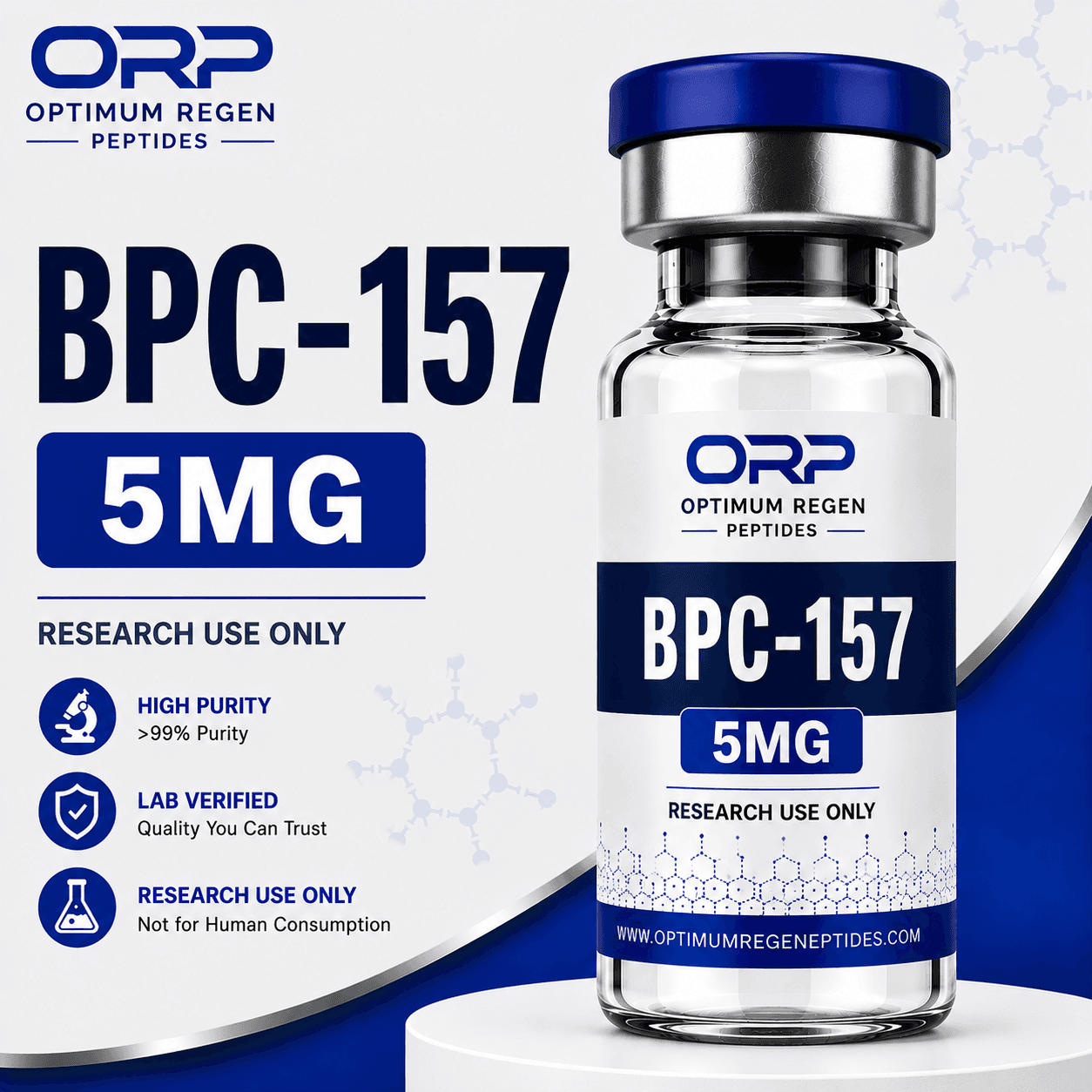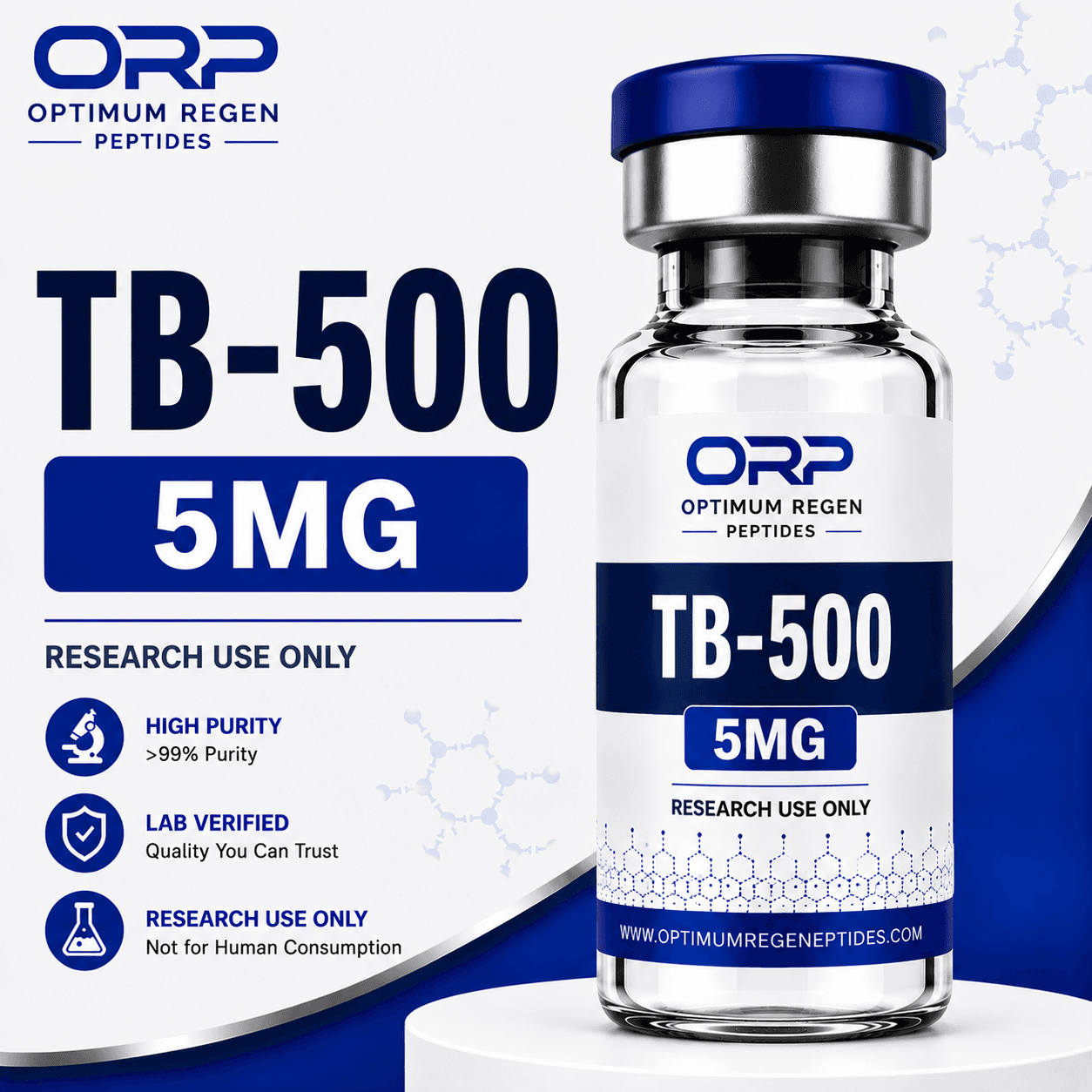
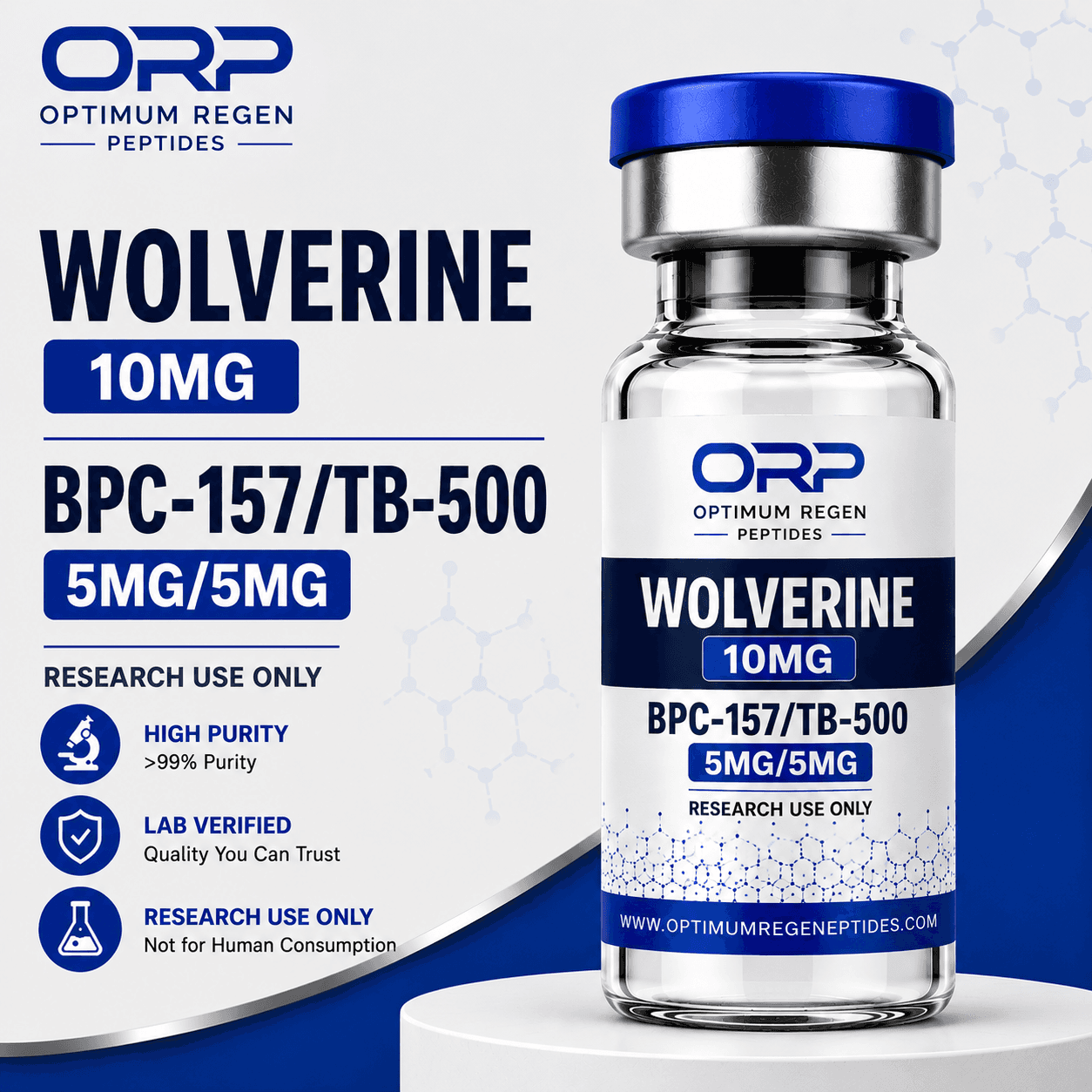
BPC-157 / TB-500
Compounded in a licensed US 503A pharmacy 🇺🇸
BPC-157 / TB-500 Research Stack.
This dual-peptide preparation contains BPC-157 (Body Protective Compound-157) and TB-500 (Thymosin Beta-4 fragment), two compounds frequently co-investigated in tissue repair and cellular migration research models. BPC-157 is studied for its roles in growth factor signaling and angiogenesis; TB-500 is researched for its actin-binding properties and effects on cellular motility in laboratory settings. Researchers combine these peptides to evaluate potential synergistic interactions across overlapping molecular pathways in preclinical assay systems. Supplied as a co-lyophilized blend of 5mg each at analytical purity. For laboratory research use only; reconstitute under sterile conditions.
- 5mg / 5mg dual format
- Research-grade formulation
- Sealed vials
Independently tested by Freedom Diagnostics using HPLC and mass spectrometry. The figure above is this batch's own measured result, not a target.
10mg · Blue Cap · reported 03/27/2026
- 2-day shipping nationwide, flat $13
- Plain, discreet packaging. No product names on the outside.
- Tracking emailed the moment your order ships.
About BPC-157 / TB-500
This research blend combines BPC-157 (Body Protection Compound-157) and TB-500 (a synthetic peptide derived from the thymosin beta-4 sequence) in equal 5 mg portions. BPC-157 is a pentadecapeptide identified in research on gastric mucosal proteins, while TB-500 is studied as an actin-sequestering peptide investigated in connective tissue biology and wound-healing models. Together, researchers combine them to examine potential complementary mechanisms in preclinical model systems.
BPC-157 has been extensively characterized in rodent models where researchers have studied its interactions with growth hormone receptor signaling, nitric oxide pathways, and musculoskeletal tissue endpoints. TB-500 research has focused on its actin-binding domain and its reported involvement in cell migration, angiogenesis marker expression, and extracellular matrix remodeling observed in laboratory cell culture systems.
This combined formulation is prepared for laboratory use only. Researchers handling this blend should follow standard peptide handling procedures including cold-chain storage, sterile reconstitution technique, and proper laboratory safety protocols. The compound is not intended for administration to humans or animals outside of formally approved preclinical study frameworks.
Buy BPC-157 / TB-500 online
BPC-157 / TB-500 is in stock and available to buy online from Optimum ReGen Peptides — a real American research-peptide company with a physical storefront in Medford, Oregon, not an anonymous overseas dropshipper. Priced from $70, every order ships within two business days, flat $13 nationwide, in plain discreet packaging with tracking.
As your BPC-157 / TB-500 supplier we back every batch with a third-party certificate of analysis and compound in a licensed US 503A pharmacy. Vials are supplied lyophilized at analytical purity for laboratory and research use only, not for human consumption.
Researched For
Both components have been independently studied in models of tendon and ligament injury, with researchers examining cellular proliferation, collagen synthesis markers, and tissue architecture in treated versus control groups.
BPC-157 in particular has been extensively investigated in rodent gastrointestinal models, with laboratory studies examining ulcer-healing endpoints, mucosal blood flow markers, and cytoprotective signaling in gut epithelial cell preparations.
TB-500 research has characterized its interactions with vascular endothelial growth factor (VEGF) expression and endothelial cell tube formation assays, making this blend relevant to angiogenesis mechanism research.
Preclinical studies have used both compounds in skeletal muscle injury models, studying satellite cell activation markers, myosin heavy chain expression patterns, and regenerative index endpoints.
Laboratory investigations have explored BPC-157 interactions with dopaminergic and serotonergic systems in rodent brain tissue, and researchers have studied TB-500 in spinal cord injury models examining motor function endpoints.
How It Is Studied
In preclinical research, BPC-157 is typically administered via subcutaneous injection or oral gavage in rodent models, enabling researchers to compare systemic versus local delivery effects on target tissue endpoints. Standard readouts include histological scoring of tissue sections, immunohistochemical staining for repair-associated markers, and quantitative PCR for growth factor gene expression.
TB-500 studies frequently use scratch assay and transwell migration protocols in vitro to characterize its effects on cell motility. In vivo rodent wound models employ planimetry, tensiometry, and immunofluorescence imaging to quantify tissue repair endpoints. When studied in combination with BPC-157, researchers typically use factorial experimental designs to distinguish additive or synergistic interaction effects.
Reconstitution of this blend is performed in sterile bacteriostatic water or saline. Researchers prepare fresh aliquots for each experimental run, document concentration calculations carefully, and confirm peptide identity by mass spectrometry prior to use in formal study protocols.
Specifications
| Form | Lyophilized powder (blend) |
|---|---|
| BPC-157 content | 5 mg per vial |
| TB-500 content | 5 mg per vial |
| Purity | >= 99% (HPLC, each component) |
| BPC-157 Molecular Formula | C62H98N16O22 |
| TB-500 Sequence origin | Thymosin beta-4 fragment (Ac-LKKTETQ) |
Storage & Handling
The lyophilized blend should be stored at -20 °C in a dry, light-protected environment. Under these conditions, the powder is stable for the duration of the labeled shelf life. Following reconstitution in sterile bacteriostatic water, the solution should be held at 4 °C and used within 7 to 10 days.
Pre-aliquoting prior to reconstitution is recommended to limit freeze-thaw cycles. Researchers should label vials with reconstitution date, lot number, and concentration. Discard any solution that appears cloudy, discolored, or shows particulate matter.
Frequently Asked Questions
Why is BPC-157 combined with TB-500 in research?+
Are BPC-157 and TB-500 naturally occurring compounds?+
What is the difference between TB-500 and thymosin beta-4?+
How should this blend be reconstituted for laboratory use?+
Is this product suitable for human research?+
Related research compounds