0105 areas
NNMT Inhibition
5-Amino-1MQ has been investigated as a selective inhibitor of nicotinamide N-methyltransferase, with studies examining how NNMT blockade affects cellular metabolism in preclinical models.

All research products on this site, including all peptides, are sold strictly for laboratory and research use only, not for human or animal consumption, diagnostic, or therapeutic use. Our tallow skincare products are topical cosmetics. You must be 21 or older to enter.
By entering you confirm you are 21+ and accept these products are for research use only. See our Terms and Disclaimer.
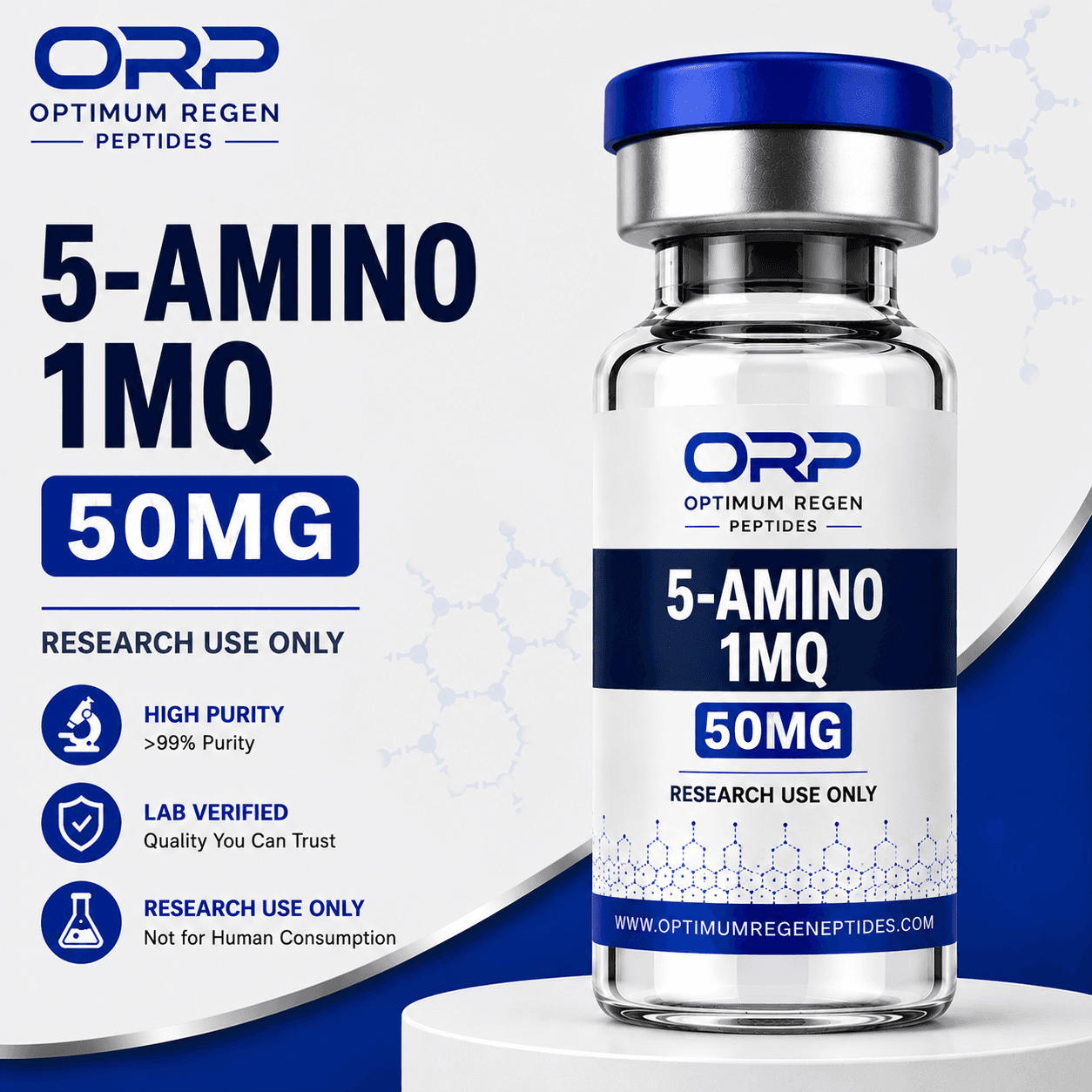
For laboratory research. Sold in 50mg and 500mg sizes.
Complete the order
Supplies and compounds researchers add to this order
Identity, purity and handling data for this compound, in one place. Tap an identifier to copy it.
For research use only. Not for human consumption.
5-Amino-1MQ (5-amino-1-methylquinolinium) is a small-molecule inhibitor of nicotinamide N-methyltransferase (NNMT), an enzyme involved in the regulation of cellular energy metabolism and NAD+ biosynthesis. Researchers have investigated this compound as a tool for modulating NNMT activity in in vitro and preclinical models, providing insight into the enzyme's role in metabolic homeostasis.
In laboratory settings, 5-Amino-1MQ has been studied for its ability to reduce NNMT-mediated methylation of nicotinamide, which influences the availability of methyl groups and the cellular NAD+ pool. These properties make it a compound of significant interest in metabolic research and the study of adipogenesis pathways.
Research into 5-Amino-1MQ is conducted under controlled laboratory conditions. Scientists use it as a biochemical probe to better understand NNMT's contributions to lipid metabolism, mitochondrial function, and metabolic signaling networks.
The areas where this compound appears in the published research literature.
In laboratory research, 5-Amino-1MQ is typically applied to cultured cell lines to assess changes in NNMT enzymatic activity via methyltransferase assays. Researchers measure downstream effects on NAD+ metabolite levels using LC-MS/MS methods and quantify lipid accumulation via fluorescent staining protocols.
Preclinical studies have administered 5-Amino-1MQ in rodent dietary models to observe whole-body metabolic parameters, including body composition, energy expenditure, and plasma metabolite profiles. These studies help characterize the in vivo consequences of NNMT inhibition and inform further mechanistic research.
Mechanistic investigations often pair 5-Amino-1MQ treatment with transcriptomic and proteomic analyses to map the downstream signaling changes that accompany NNMT inhibition, establishing a fuller picture of the enzyme's regulatory network.
Lyophilized 5-Amino-1MQ should be stored at -20 °C in a sealed, desiccated container away from direct light. Reconstituted solutions are best prepared fresh in sterile solvent and used promptly; if storage of reconstituted material is necessary, aliquot into single-use volumes and keep at -80 °C to minimize freeze-thaw degradation.
Laboratory best practice calls for working with the compound in a low-humidity environment and minimizing exposure to oxidizing conditions. Stability data should be consulted for the specific solvent system used, as aqueous solutions may differ from DMSO stocks in long-term stability.
5-Amino-1MQ (5-Amino-1-methylquinolinium) for sale from Optimum ReGen Peptides, a US research-peptide company with a storefront in Medford, Oregon. It is in stock, priced from $70. Every order ships 2-Day Priority Air, a $13 flat rate anywhere in the US, with tracking, or can be picked up at the store.
The current batch has a published third-party certificate of analysis, shown above. 5-Amino-1MQ is supplied as lyophilized powder, for laboratory and research use only, not for human consumption.