0103 areas
Fibroblast and extracellular matrix biology
Laboratory studies have investigated GHK-Cu's ability to stimulate fibroblast migration and proliferation, and to influence collagen and glycosaminoglycan synthesis in cell culture models.
All research products on this site, including all peptides, are sold strictly for laboratory and research use only, not for human or animal consumption, diagnostic, or therapeutic use. Our tallow skincare products are topical cosmetics. You must be 21 or older to enter.
By entering you confirm you are 21+ and accept these products are for research use only. See our Terms and Disclaimer.
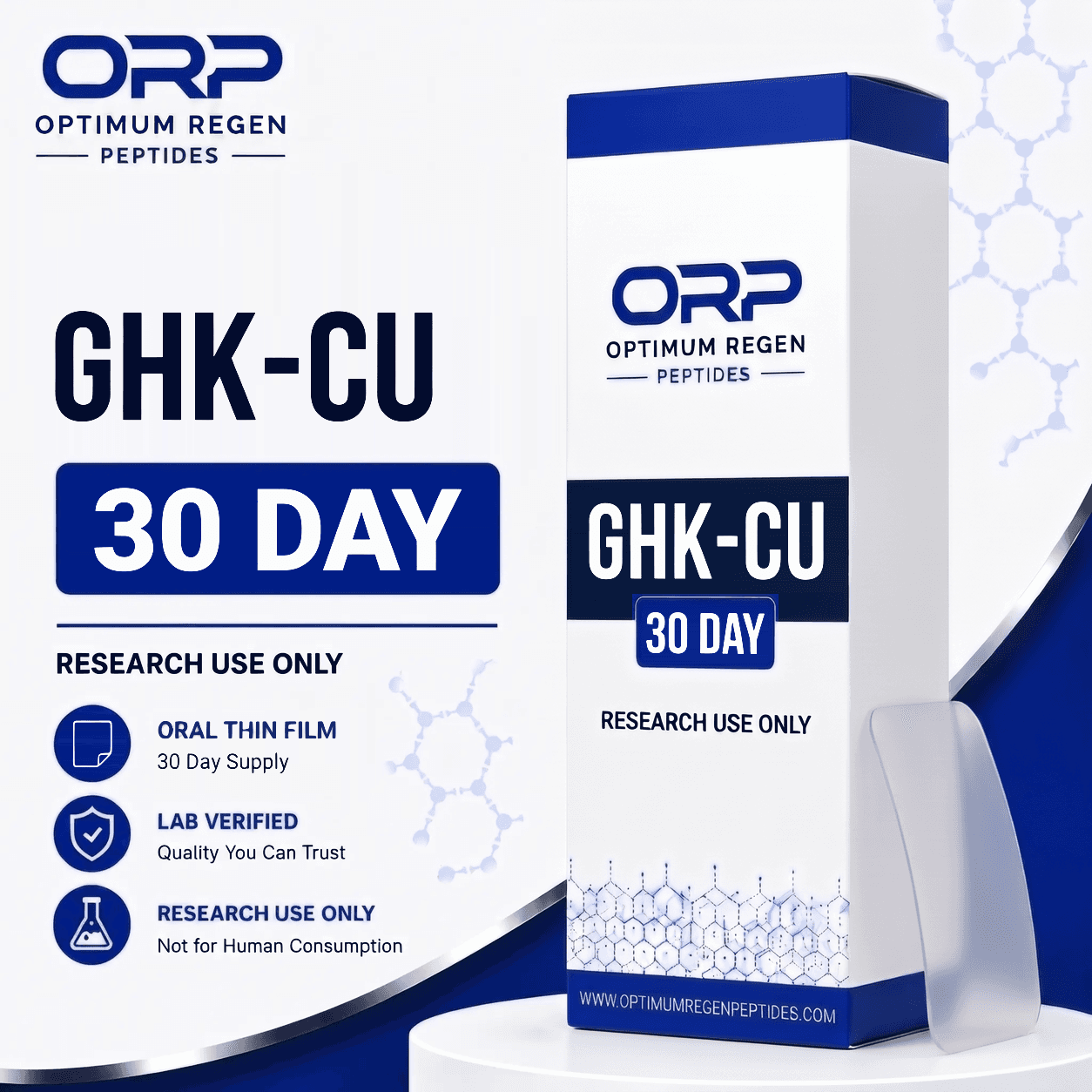
GHK-Cu is the copper-binding tripeptide studied in tissue-repair and skin research, supplied as a research oral thin film.
New product line: orders ship from Nov 9, then 2-Day Priority Air.
Complete the order
Supplies and compounds researchers add to this order
Identity, purity and handling data for this compound, in one place. Tap an identifier to copy it.
A third-party certificate for GHK-Cu Oral Thin Film is not published here yet. If your work needs one, ask us before ordering and we will tell you what testing is available for the current lot.
Ask about a certificateFor research use only. Not for human consumption.
GHK-Cu is supplied in oral thin film (OTF) format: thin, dissolvable film strips packed in a box.
GHK-Cu (Glycyl-L-Histidyl-L-Lysine copper complex) is a naturally occurring tripeptide-copper complex first isolated from human plasma. It is found in saliva, urine, and various tissues and its concentrations in plasma decline with age. The compound has been extensively studied in cell biology and wound-healing research for its interactions with copper-binding proteins and its reported influence on gene expression profiles.
Research published over several decades indicates that GHK-Cu modulates a broad array of biological processes at the cellular level. Studies have examined its effects on fibroblast activity, extracellular matrix remodeling, antioxidant enzyme expression, and angiogenesis-related signaling pathways. Its small size and copper-chelating structure facilitate cellular uptake in laboratory models.
As a research compound, GHK-Cu is investigated in contexts ranging from tissue biology to skin model research and gene regulation studies. It is intended strictly for laboratory use and is not approved as a pharmaceutical or therapeutic agent.
The areas where this compound appears in the published research literature.
In cell culture systems, GHK-Cu is typically applied to fibroblast or keratinocyte monolayers at nanomolar to micromolar concentrations. Researchers measure outcomes such as cell proliferation rate, migration assay results, collagen secretion (via ELISA or hydroxyproline assay), and gene expression changes via quantitative PCR or transcriptomics.
Animal models of wound healing have been employed to assess how GHK-Cu applied to wound sites influences closure rates, tissue architecture, and collagen deposition histologically. These models help contextualize the in vitro findings within a more complex biological environment.
Keep the package sealed and store it as labeled on the product, away from heat, direct light and moisture.
Supplied for laboratory research use only. Not for human or animal use, and not intended to diagnose, treat, cure, or prevent any disease.
GHK-Cu Oral Thin Film for sale from Optimum ReGen Peptides, a US research-peptide company with a storefront in Medford, Oregon. It is in stock, priced from $175. Every order ships 2-Day Priority Air, a $13 flat rate anywhere in the US, with tracking, or can be picked up at the store.
GHK-Cu Oral Thin Film is supplied as oral thin film (otf), boxed, for laboratory and research use only, not for human consumption.